
The honest answer
Wax works. The Dubai sun simply outworks it.
One is a soft film you reapply forever, the other is a cured layer fitted once with the polish included, from AED 1,999. Here is how to decide without a sales pitch.
Is ceramic coating better than wax?
For most cars living in this climate, yes, and the ceramic coating vs wax question is really a question about time. Wax is honest, affordable protection that softens in summer heat and washes away within weeks, so it only works if you keep reapplying it. A ceramic coating from AED 1,999, machine polish included, cures into the paint and keeps repelling sun, sprinkler water and dust for years rather than weekends. Wax is protection you rent; a coating is protection you own.
What wax actually does on a Dubai car
Credit where due: a fresh coat of carnauba on well-washed paint is a lovely thing. It deepens colour, beads water, and puts a sacrificial layer between the clear coat and the world, all for pocket money and an hour of pleasant work in the shade. Enthusiasts have sworn by it for generations, and on the day it is applied, waxed paint and coated paint are hard to tell apart. Everything that separates them happens afterwards, out in the heat, and the gap widens with every week the wax spends fighting a climate it was never really formulated for.
How does ceramic coating vs wax hold up in July?
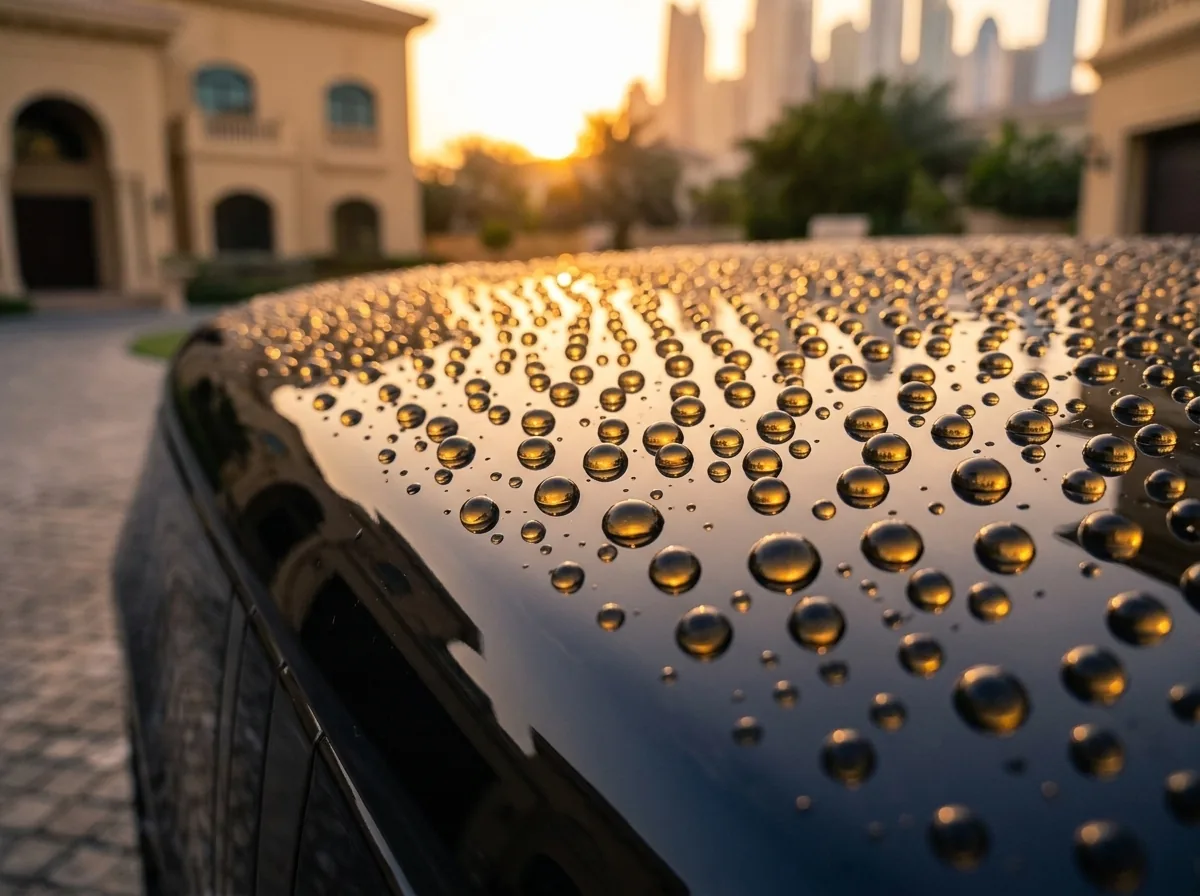
This is where the argument ends for most owners. Wax is a soft, organic film, and a bonnet in direct summer sun gets hot enough to make it slump, thin and migrate; the UAE weather service does not need quoting to anyone who has touched a parked car in August. Add sprinkler mist drying into mineral spots and dust settling into the softened surface, and a July wax is often finished within the month it was applied. A cured ceramic layer is a different material class: hard, chemically bonded and thermally stable, it behaves the same on the hottest afternoon as it did in March.
Buying once or buying repeatedly: which is cheaper?
Do the arithmetic over the life of the car rather than at the till. Wax wins every single purchase: a tin costs very little, and doing it yourself costs only your Saturday. The catch is the word every, because the climate makes you repurchase constantly, in product, in hours, or in paying someone each visit. The coating inverts the shape of the spend: one figure, from AED 1,999 with the correction work included, then years in which protection is simply a property the car has. What the entry figure covers and what moves it are broken down on our coating price guide.
Ceramic coating vs wax over a year of washes
| Question | Wax | Ceramic coating |
|---|---|---|
| Survives summer heat? | Softens and fades in weeks | Stable for its rated years |
| Where the gloss comes from | The wax layer itself | The polished paint it locks in |
| Preparation needed | A clean, dry car | Machine correction, included in our price |
| Water behaviour | Beads while fresh | Beads for the life of the layer |
| Your ongoing role | Reapply, forever | Wash gently, nothing more |
Who should still wax?
More people than coating sellers admit. If you genuinely enjoy the ritual, wax on: the process is half the hobby, and your paint benefits from the attention that comes with it. If the car is leaving your life soon, spending coating money on the next owner's paint is generosity, and a wax bridges the gap nicely. Classics that sleep under covers and emerge for occasional drives suit wax culture too. And if the budget honestly ends at a tin, a waxed car beats a bare one every day of the week. Our only hard advice is about paint condition, which the next section explains.
Why does heat beat wax so quickly here?
Chemistry, with no villain in the story. Waxes are blends of soft organic materials chosen for warmth and depth, and their melting behaviour sits uncomfortably close to what a Gulf summer does to horizontal panels. Each day cycles the layer soft, each night firms it again, and the layer loses a little structure every round trip. Meanwhile sprinkler water evaporates into alkaline mineral spots that etch through the weakened film, and airborne dust embeds in it while soft, turning your protection into fine sandpaper for the next wipe. None of this happens to a cured coating, whose bond to the paint is not something an afternoon of sun renegotiates.
What preparation does each one deserve?
Here the two products genuinely differ in philosophy. Wax is forgiving: it goes over whatever finish exists, brightens it, and hides light swirls under warm gloss for a while, which is precisely why waxed cars can look better than they are. A coating is unforgiving and permanent about it: whatever the paint looks like at application is what gets preserved for years, so proper machine polishing beforehand is non-negotiable, and it is built into our coating price rather than offered as an upsell. One product flatters the paint you have; the other commits to it, so the paint had better be right first.
Where the coating earns its money, week by week
The dividend is paid in ordinary Tuesdays, and it compounds. Dust films rinse off a coated car instead of bonding to it, so washes get shorter and gentler, which in turn means fewer new swirls for the life of the car. Water spots stop etching because minerals cannot grip the surface. The gloss you paid for in the correction stage is still there at year's end, next summer included, without a single reapplication session. The full picture of what the layer does, and the 2-year and 5-year packages behind it, live on our ceramic coating page.
If you are choosing protection, choose in this order
First, fix the paint, because neither wax nor coating repairs anything. Second, decide what threatens your car: if the answer includes stone chips from daily motorway miles, read our film comparison before spending, since impact is a different problem with a different product. Third, match protection to ownership: keepers coat, short-timers wax or coat at the 2-year tier, hobbyists do whatever makes Saturday enjoyable. One message with the model, one written figure back, no showroom pressure in between.
Coating vs wax
The follow-ups we hear
How long does wax honestly last in Dubai?
Outdoors in summer, think weeks, sometimes less on horizontal panels. Covered parking stretches it, winter stretches it further, but it remains a subscription either way.
Do you offer a waxing service?
No. It would need repeating so often here that we would be selling you labour on a loop, and that sits badly with us. Washes and coatings are the menu we stand behind.
Can I put wax on top of a ceramic coating?
You can, and it mostly gets in the way, masking the slickness the coating provides. A gentle wash serves coated paint better than any topper.
Will a coating stop stone chips like some ads imply?
No. Chips are impact damage, and stopping them is film territory. A coating defends against chemistry and sun, and anyone claiming more is stretching.
I wax regularly and the car looks great. Should I switch?
If the routine brings you joy, keep it, sincerely. The coating exists for owners who want that result without the treadmill, and both paths care for the paint.
Does a coated car still need washing?
Yes, just faster and more safely. Dirt still lands; it simply releases without a fight, and the two-bucket hand wash keeps the coating performing for its rated years.
Stop renewing your paint protection every month
Tell us the car, how it parks and how long you are keeping it. The honest recommendation and the written figure come back on WhatsApp.