
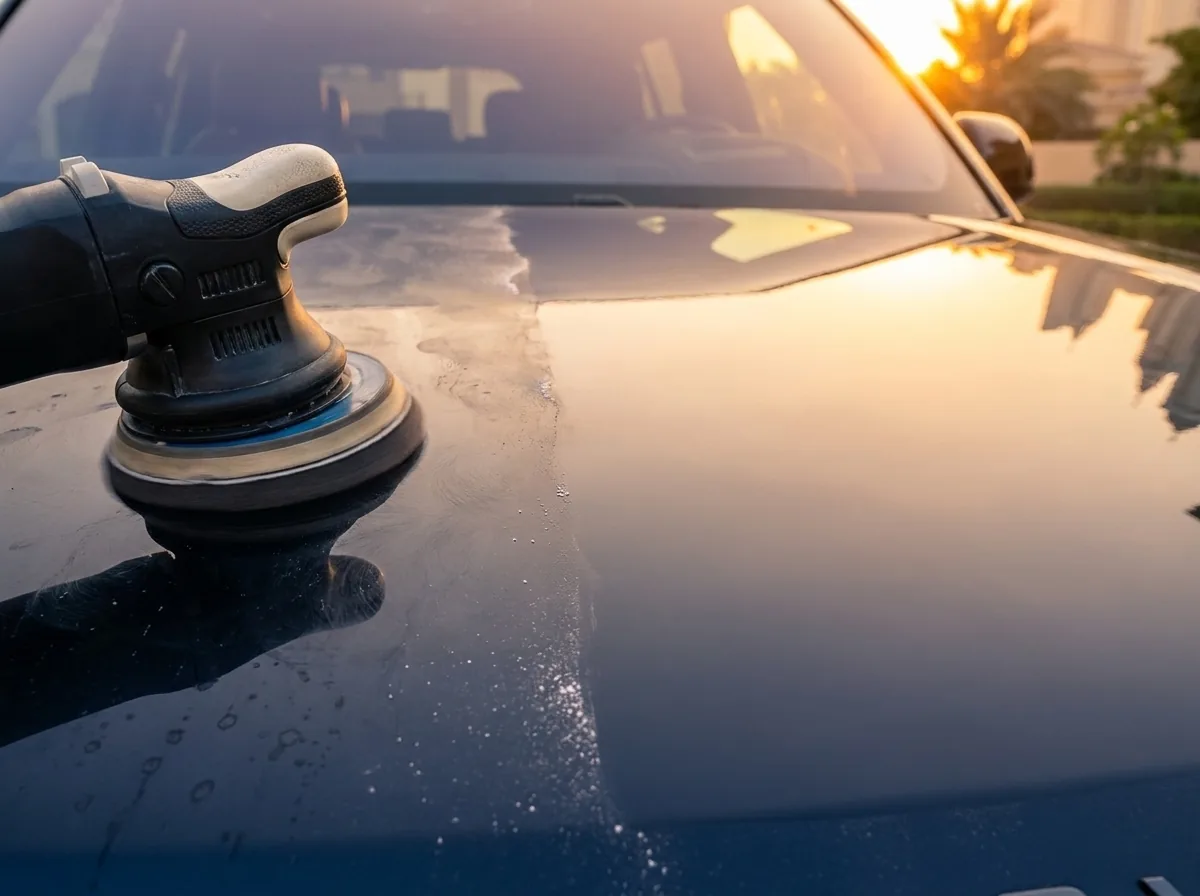
Paint correction
One pass or several: let the paint decide
Polishing starts at AED 799. Whether your car needs a single refining pass or a full cut-and-refine correction gets decided by a test spot, never by a sales script.
What is the difference between single stage and multi stage polishing?
The single stage vs multi stage polishing decision is about how deep the damage sits. A single stage polish from AED 799 uses one finishing combination to remove light swirls and restore gloss in a single machine pass over each panel. Multi stage correction runs a cutting pass to level deeper defects first, then a refining pass to bring back clarity, and is quoted above the single stage figure in writing once we have seen your paint. A test spot on your own car decides which one is honest to sell you.
Single stage vs multi stage polishing: what each pass does
Every polishing pass is a controlled trade: a compound of a chosen aggression, on a pad of a chosen firmness, removes a whisper of clear coat to level the surface around a defect. The tiers are simply different answers to how much levelling the paint needs.
| Question | Single stage | Multi stage |
|---|---|---|
| Passes per panel | One, with a finishing polish | Cutting first, then refining |
| Built to fix | Light swirls, wash marring, dull gloss | Deeper scratches, oxidation, holograms |
| Clear coat used | The minimum | More, spent deliberately |
| Price | from AED 799 | Quoted in writing after the test spot |
What can one pass honestly fix?
More than most owners expect, provided the damage is shallow. The fine spiderwebbing that petrol-station washes leave, light water-spot etching, the general dullness a few years of sun and dust grind into a finish: all of that lives in the top layer of clear coat, and a single well-chosen pass erases it while restoring genuine depth of gloss. Where the single stage stops being honest is depth: a scratch your fingernail catches in has cut below what one finishing pass can level, and polishing around it harder just burns time and clear coat. That is a cutting job, or sometimes no polishing job at all.
When does paint need cutting before refining?
When the damage has history. Years of brush washing lay down scratches too deep for a finishing polish to touch. Oxidation from open-air parking turns the top of the clear coat chalky, and that dead layer must come off before gloss has anything to stand on. Holograms are the strange one: wavy buffer trails left by a previous detailer who cut the paint and never refined it, visible under low sun on dark cars. Cutting compounds level all of these, and they leave their own fine haze behind, which is exactly why the refining pass exists. Cutting without refining is half a job wearing a full job's name.
How does the paint's condition decide the tier?
Not from a photo and never from a phone call; from a test spot. We pick a small section of your worst panel, work it with the single stage combination, and read the result under LED light. Paint that clears up has answered the question cheaply. Paint that improves but keeps its deeper marks has also answered it, and now you can see with your own eyes what the extra stage is buying before you pay for it. The test spot decides the tier, the tier decides the written price, and you approve both before the machine touches the rest of the car.
Single stage vs multi stage polishing on price
The single stage tier opens at AED 799 for a standard sedan, with size and condition setting your exact written figure, the same from-price logic as everything on the price list. Multi stage is quoted above it because the hours roughly double: every panel is machined twice with a pad and compound change between rounds. What you should never pay for is a guess. A multi stage quote issued without anyone examining the paint means either the price is padded or the scope is fiction, and both varieties are common enough locally that our polishing service page leads with the test spot for a reason.
Is there paint that neither tier can save?
Yes, and pretending otherwise is how detailers burn through cars. Polishing spends clear coat, a controlled sliver each time, from a budget the factory set and nobody can top up. Paint that has been machine-polished many times before, clear coat worn thin on edges and roof rails by years of sun and rough washing, a previous respray that is failing or peeling, deep scratches that reach the colour layer: each of these is a case where the honest answer is a bodyshop, or acceptance, and we give that answer for free from your photos. Sending a car away is better business than handing back a corrected car with clear coat too thin to protect it.
What should follow a correction?
Protection, and quickly, because corrected paint is beautiful and completely undefended. The same washing habits that swirled the car the first time will swirl it again, and repeating corrections is a losing game for the reasons above. The natural pairing is ceramic coating from AED 1,999, which locks the corrected finish under a cured layer, and whose price includes the polish when booked as one job. If the cabin needs rescuing at the same time, the full detail from AED 999 wraps correction and interior into one visit that runs most of a day.
The pads, compounds and light doing the work
Correction quality is mostly decided before the trigger is pulled. We run Koch Chemie compounds across both tiers, matched to pad and paint on the test spot, and the van's machine polishers and LED rig turn your parking bay into a workable studio, basements included. Light deserves its own mention: swirls vanish in shade and reappear in sunlight, so a correction is only ever as honest as the lamp it was checked under. Every panel we finish gets inspected under the LEDs before we call it done, which is the habit that separates corrected paint from paint that merely looked corrected at handover.
Decided at your car, not over the phone
- 1
Inspect under proper light
Swirls hide in shade. The LED rig shows what the paint is really carrying.
- 2
Polish a test spot
A small section gets the single stage treatment, and the result speaks for itself.
- 3
Fix the scope and price
Single or multi stage, agreed in writing on WhatsApp before the rest of the car is touched.
Correction questions
Owners ask, we answer
Is single stage enough for a black car?
Often yes, if the paint is merely swirled rather than scratched. Dark colours display defects loudest, which makes the test spot most valuable on exactly these cars.
Does polishing remove clear coat?
Yes, a controlled sliver every time, from a finite budget. That is the argument for correcting properly once, then protecting the result, instead of polishing casually and often.
Can you polish just one panel?
Yes. A scuffed door or dull bonnet can be corrected alone and blended into its neighbours, and it is quoted in writing like any full job.
Why not just book multi stage to be safe?
Because cutting is not a safety margin, it is clear coat leaving your car. Paying for an aggressive stage the paint does not need costs money and paint thickness for zero visible gain.
Where does the work happen?
At your address. The van carries the machines, the power and the lighting, and there is no workshop to drop the car at because there does not need to be.
Will the swirls come back after correction?
Only if the washing that caused them carries on. Two-bucket hand washing keeps corrected paint corrected, and a coating on top makes every future wash gentler still.
A test spot beats every opinion about your paint
Send photos of the car in sunlight. We tell you which tier the paint likely needs, then prove it at your parking bay.