
Polish aftercare
Should I wash my car after polishing? Yes, by hand
The polish needs no wait. A sealant or coating does. Here is which rule applies to your car.
Should I wash my car after polishing?
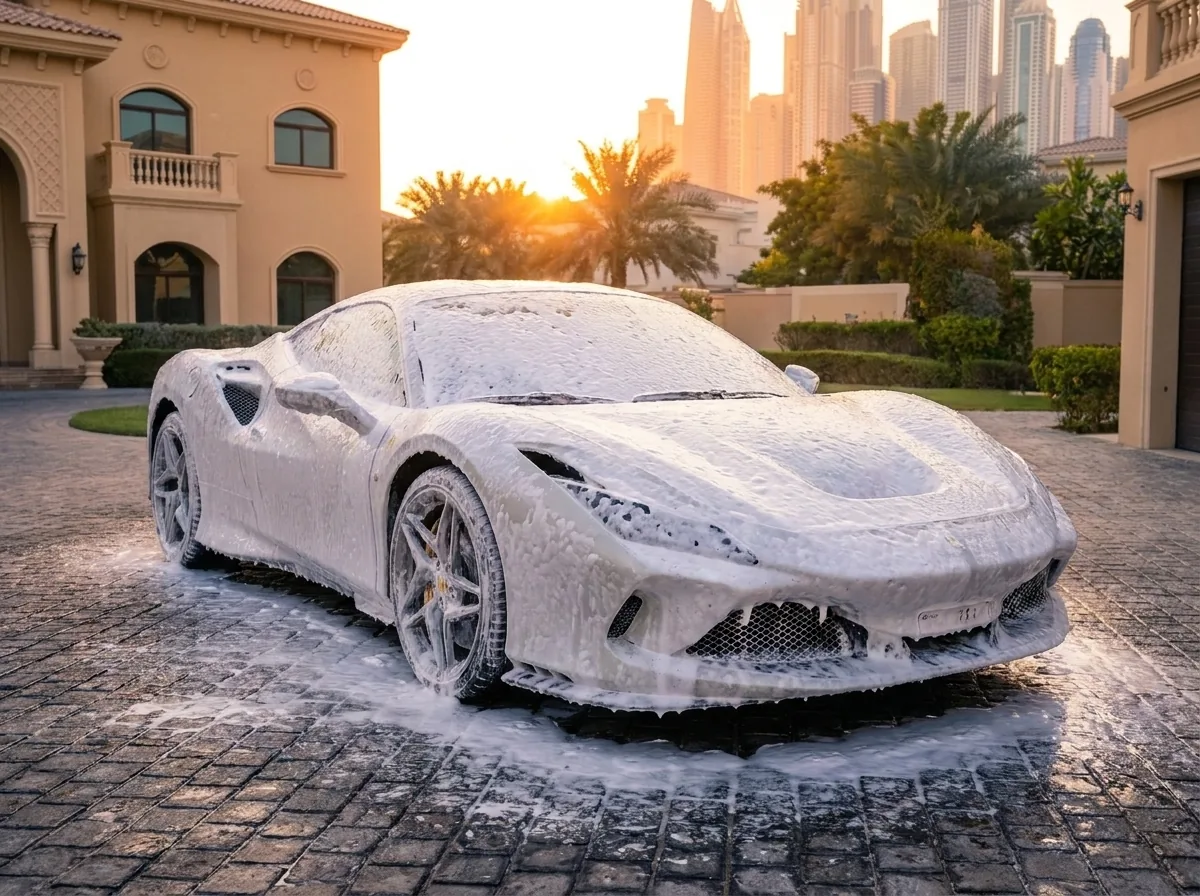
Yes, and sooner is better than later. After polishing, the polish itself needs no curing time, so a gentle hand wash within a day or two is safe and keeps Dubai dust off paint that now has nothing on it. The wait only applies to what goes on top of the polish: a sealant or ceramic coating needs to stay dry first. Our Premium Wash is a hand wash at your door from AED 249, and it is the right first wash for freshly polished paint.
Most people ask this because someone told them to leave a polished car alone for a week. That advice belongs to coatings, not to polish. Mixing the two up is how a clean, corrected car ends up under three days of fine dust before anyone touches it.
Why does freshly polished paint need washing sooner?
Polishing levels the clear coat and removes the old, oxidised film that was sitting on the surface. What is left is clean paint with no wax, sealant or coating over it. That is the best the surface will ever look, and also the most exposed it will ever be.
In Dubai that exposure counts. Fine dust lands on the car every night, and on bare paint it settles straight onto the clear coat. Leave it for days and the first wipe drags it across the finish. That drag is how new swirls start, which is the exact damage the polish just removed.
How soon after polishing can you wash the car?
If the polish was the last step, you can wash the same day or the next. There is nothing to cure. The only reason to hold off is if a protective layer was applied after the polish, and then the instructions for that layer decide the wait, not the polish.
A simple rule works for most cars. No protection applied: wash when the first dust shows, gently. Sealant applied: keep the car dry for the time the product asks, usually about a day, then wash as normal. Ceramic coating applied: follow the longer wait it asks for, which is typically a full day dry and about a week before any shampoo wash. We give you the exact time for the product used before we leave.
Which kind of wash is safe on a polished car?
A hand wash with a clean mitt, a pH-neutral shampoo and a separate bucket for rinsing the mitt. Dry with a soft microfibre towel, patting rather than dragging. That is the whole method, and it is what we do at the door.
The wash types to avoid are the ones with moving brushes. Automatic brush tunnels are where most swirl marks come from, and a polished car goes back to square one in a single visit. Touchless washes are kinder to the paint but use strong chemicals that strip whatever protection you have just put on.
Dry wiping is the quiet one. Using a cloth or a duster on a dusty car feels like care and does the same damage as a brush. If the car is dusty, rinse first or leave it for the wash.
Does Dubai heat change how you wash it?
Yes, mostly through timing. Water and shampoo dry in seconds on a panel that is hot to the touch, and what they leave behind is water spots and shampoo film that sit on the clear coat. Wash in shade, early morning or evening, and keep the car wet until the final rinse.
Our visit is booked around that. A basement bay or covered parking is ideal, and a villa driveway works when the car sits in shade. If neither is available, tell us on WhatsApp and we pick a time slot when the panels are cool.
Do you wash differently after a Full Detail or a ceramic coating?
Slightly, because each leaves different protection on the paint. The Full Detail starts at AED 999, includes a machine polish and finishes with a protective sealant, so the sealant sets the first-wash rule. A ceramic coating from AED 1,999 goes on after the paint is corrected and asks for the longest wait of the three.
A standalone polish from AED 799 has no layer on top. That makes it the simplest case: wash when it is dusty, by hand, and plan the protection step if you want the finish to hold. The page on car polishing covers what the job involves.
Mistakes that undo a fresh polish
Four come up again and again. Taking the car through a brush wash the same week. Wiping dust off dry. Washing in full sun so the shampoo dries on the paint. And using a dirty mitt or a towel that dropped on the ground, because trapped grit scratches clear coat in one pass.
None of them needs special products to avoid. They need a slower, wetter, gentler wash, which is why a hand wash done properly beats any machine for a corrected finish.
Should you wax or seal the car after polishing?
If you want the gloss to last, put something on it. Polish removes damage and leaves the paint bare, so the next dust and heat cycle starts working on it right away. A wax or sealant gives that bare surface a layer to take the wear instead. The difference between the two is covered in waxing versus polishing.
A coating is the long version of the same idea and the reason paint correction comes first: it locks in whatever is underneath. If you are still deciding whether the polish itself is worth the money, read polish worth it.
The simple plan after polishing
First, keep the car out of brush washes from day one. Second, rinse before any wipe. Third, book a hand wash every two weeks or so, which for a car parked outside in Dubai is a realistic rhythm. Fourth, add a sealant or coating when you want the result to outlast the first month.
Send a photo of the car on WhatsApp with what was done and when. The reply says whether to wash now or wait, and for how long.
Before you wash
Washing a polished car, answered
Can I wash my car the same day it was polished?
Yes, if no sealant or coating went on afterwards. Polish itself does not cure. If protection was applied, wait the time its instructions give before water touches the car.
Can I use a car wash with brushes after polishing?
We advise against it. Brushes put swirl marks back into corrected paint, often within one wash. A hand wash with a clean mitt keeps the finish as it was left.
How long should I wait to wash after a ceramic coating?
Typically a full day dry, then about a week before a shampoo wash. We confirm the exact times for the product we used before we leave.
Does polishing remove the wax that was on my car?
Yes. Polishing takes off the old wax and sealant along with the damaged surface layer, so the paint is bare afterwards unless we apply new protection.
Is a rinse enough if the car is only dusty?
A gentle rinse with plenty of water lifts loose dust without touching the paint. Never wipe a dusty car dry, because the dust acts like sandpaper under the cloth.
Tell us what was done, we tell you when
Send the date and what went on the paint. The reply gives the wait, if any, and a hand wash slot.