
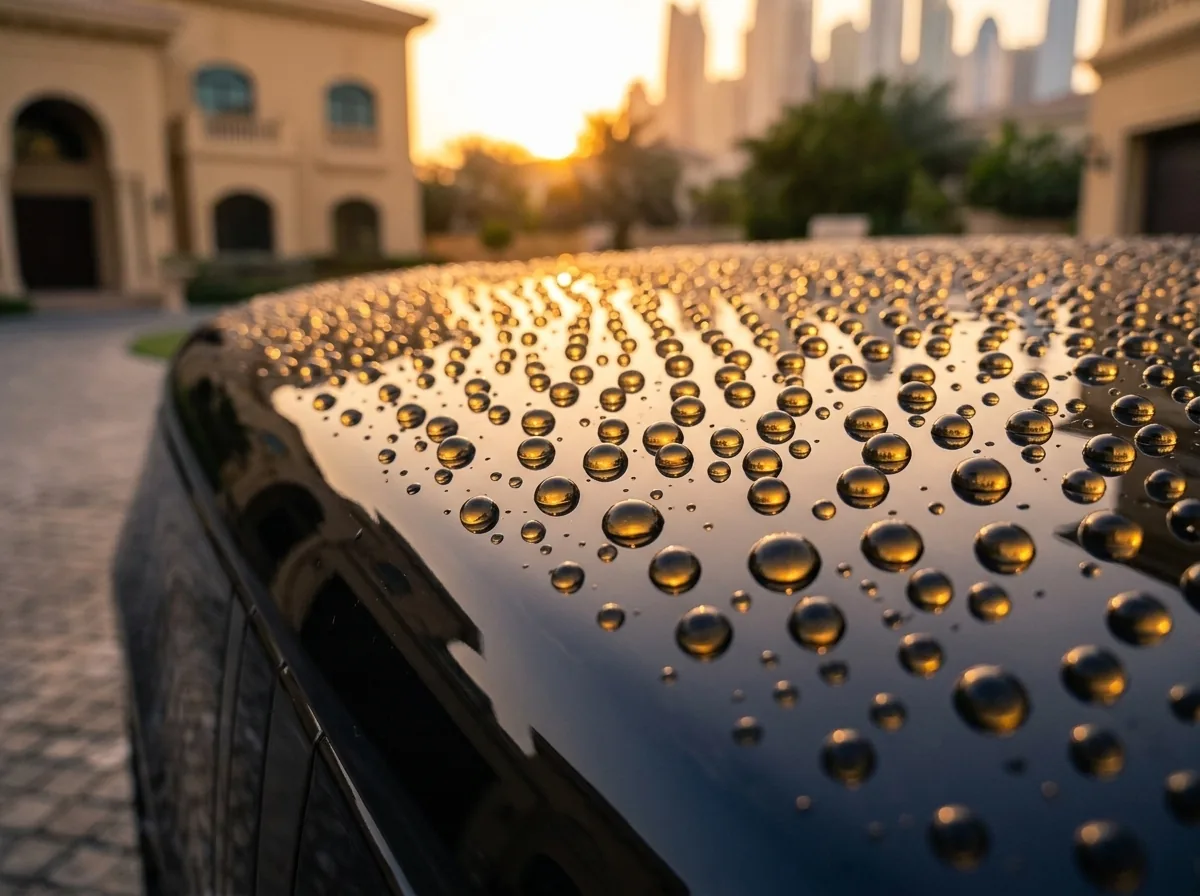
Summer proof
Summer is the argument for a coating, not against it
A cured coating handles the season that ages bare paint fastest. From AED 1,999 with the machine polish included, applied at your door.
Does ceramic coating work in UAE summer?
Yes. A properly cured ceramic coating is built for exactly the conditions a UAE summer throws at a car: relentless UV, surface temperatures hot enough to cook water spots into bare clear coat, and dust that bonds harder the hotter the panel. The cured layer is chemically stable in heat, keeps beading and releasing dirt straight through August, and blocks the UV that fades unprotected paint. The one summer-specific consideration is the first days after application, when a fresh coating wants shade while it cures, and we plan the job around that.
What happens to a cured coating in the heat?
Very little, which is the point. Once a coating has cured it is no longer a liquid but a hard, cross-linked layer bonded to the clear coat, and the temperatures a parked car reaches here sit comfortably inside what that chemistry tolerates. It does not soften in the afternoon, wash away in humidity or thin out over a hot season. What summer does do is test the coating constantly: every noon is a UV test, every sprinkler pass a beading test. Cured coatings pass those daily; bare paint takes the same tests as damage.
What does UAE summer do to unprotected paint?
The quiet damage runs on three tracks at once. UV, which the national weather centre flags at extreme levels through the long middle of the year, slowly breaks down the resins in clear coat until the finish dulls and, on reds especially, fades. Heat turns every water droplet into an etching tool, because minerals concentrate as the water flashes off a panel hot enough to fry on. And dust bakes onto soft, sun-warmed clear coat far more stubbornly than it settles on a cool one. None of it announces itself. Owners simply notice, one October, that the car has stopped looking new.
Why summer is when the coating works hardest
A protective layer proves its value in proportion to what it is protecting against, and nothing here attacks paint like the hot months. The coating takes the UV hit sacrificially. Water spots dry on top of it rather than into the clear coat, and come off with a normal wash instead of a polishing machine. Baked dust releases from the slick surface with a rinse. The same product in a mild climate would be a convenience; in this one it is closer to insurance that pays out daily. Whether that insurance fits your ownership plans is the subject of our worth-it guide.
The cure window: the one summer caveat
A coating leaves our hands glossy but not yet fully hardened, and the first stretch after application is when it is vulnerable. Fresh coatings should not bake in direct noon sun, get rained on by sprinklers or be washed until the cure completes. In summer that means one practical thing: the car needs a shaded or covered bay for the first days, and we confirm you have one before booking the job. The application itself happens in shade as well, since coating chemistry and a scorching panel do not mix. Plan that small window properly and the season stops being a factor at all.
Do water spots still happen in summer?
On a coated car, yes, they still form, and honesty about that matters. Sprinkler overspray drying on a hot panel leaves mineral rings whether the surface is coated or bare. The difference is where the minerals sit. On a coating they rest on the sacrificial layer and rinse or wipe away with the next wash; on bare paint they etch in and become permanent within weeks of repetition. So the habit stays the same in both worlds, deal with visible spotting at the next wash rather than next month. The coating just turns a paint repair into a cleaning task.
How do you wash a coated car in UAE summer?
Gently, in the right hours, on cool panels. Early morning and evening slots are the good ones, and since we run to 10pm the evening option is real. Washing a scorching panel makes any shampoo misbehave and any rinse water spot instantly, so shade and timing do more for the result than any product choice. The method stays the usual: pH-neutral shampoo that will not strip the coating, two buckets, microfibre drying. Every wash resets the slickness, which is the small weekly pleasure coated-car owners keep mentioning to us.
Glass and wheels: the rest of the summer kit
The paint is the headline, but summer punishes other surfaces in supporting roles. Wheels run hot year-round and hotter still in August, and brake dust bonds to hot alloys with real determination; the Wheel & Caliper Ceramic add-on at AED 349 seals them so the dust rinses off instead of caking. Windscreens collect the same mineral spray and dust film as paint, and a coated screen sheds rain and sprinkler water while staying clearer in low sun. That one is the glass coating add-on at AED 249, done in the same visit as the paint.
Is summer a bad time to get the coating done?
No, and for many owners it is the sensible time, provided the cure window is respected. The work happens in shade, the van carries its own power for the machine stages, and an evening or early slot avoids the worst panel temperatures. Coating in June means the car wears protection through the exact months that do the most damage, rather than getting coated in November to protect it from the mild season. The only real disqualifier is having nowhere shaded for the car to sit while the coating hardens, and that is a scheduling problem we solve together on WhatsApp.
Two years or five: longevity in a hot climate
Our packages are rated for 2 or 5 years, both from AED 1,999 as a from-price, with the split explained on the coating prices page. Climate does not void those lifespans, but care decides where in the band a coating lands: a coated car that gets regular gentle washes keeps its behaviour to the far end of the rating, while one that spends summers filthy under baked-on minerals wears its coating out doing unpaid overtime. The coating is the durable part of the system. The washing rhythm is what lets it serve its full sentence.
Keep exploring: coating vs wax.
Heat questions
Coatings and the hot months
Will the coating peel or discolour in the sun?
A cured professional coating, no. Peeling and yellowing stories almost always trace back to cheap consumer sprays or coatings applied over dirty paint, which is why the polish and prep stages are not optional with us.
Does the car need to stay indoors after coating?
It needs shade and dryness while the coating cures in the first days: a basement bay, a covered villa spot or even a carport out of sprinkler reach. We confirm the parking plan before we book the job.
Can you apply a coating outdoors in July?
In shade, yes. The van brings power and lighting, and we schedule morning or evening so panels stay in workable temperatures. What we will not do is coat a panel sitting in direct summer sun.
Does a coating keep the car cooler?
No, and nobody honest will tell you otherwise. It protects the paint from UV damage; cabin heat is about glass, shade and ventilation. For the windscreen there is a separate glass coating that helps visibility, not temperature.
Is beading weaker in the hottest months?
Beading can look less dramatic when water evaporates the moment it lands. The protection is unchanged; judge the coating by how easily the car washes clean, which stays consistent through the season.
Should I wait until after summer to coat a new car?
The opposite is usually smarter. A new car coated before its first summer skips the damage entirely instead of being corrected after it, and new paint needs the least preparation, which keeps the job at the low end of the range.
Protected paint has a better summer than you do
One visit, one full day, and the car meets the season sealed. Fixed WhatsApp price before we come, shade rules explained honestly.